
Environmental Corporate Portrait Photography
In an era dominated by increasingly powerful battery monolights and feature-rich TTL systems, it would be easy to overlook the Elinchrom ELB 400. Yet for photographers specialising in environmental corporate portraiture, the ELB 400 paired with a Pro Head remains one of the most capable and well-balanced portable lighting systems available on the used market.
Having used this combination extensively for corporate assignments, I continue to find that it offers an outstanding balance of portability, power, battery performance and light quality. Whether photographing executives in modern offices, engineers on manufacturing floors, healthcare professionals in clinical environments or business owners at their place of work, the ELB 400 consistently delivers professional results with remarkably few compromises.

Portability and Practicality
One of the ELB 400's greatest strengths is its separate pack-and-head design. By housing the battery and power electronics in a dedicated pack rather than the flash head, Elinchrom keeps weight off the light stand, making the system easier to position and handle in real-world working environments.
For location-based corporate assignments, this offers several practical advantages. Set-ups are easier to move between locations, stands are less top-heavy, and the compact head is less intrusive when working in busy offices, production facilities, healthcare settings or public-facing environments.
A typical set-up comprising the ELB 400 pack, Pro Head, modifier and lightweight stand is considerably easier to transport than many larger battery monolights. For photographers who regularly work on location rather than in the studio, this portability quickly becomes one of the system's most valuable attributes.
Lightweight Head Design: A Real Advantage on Location
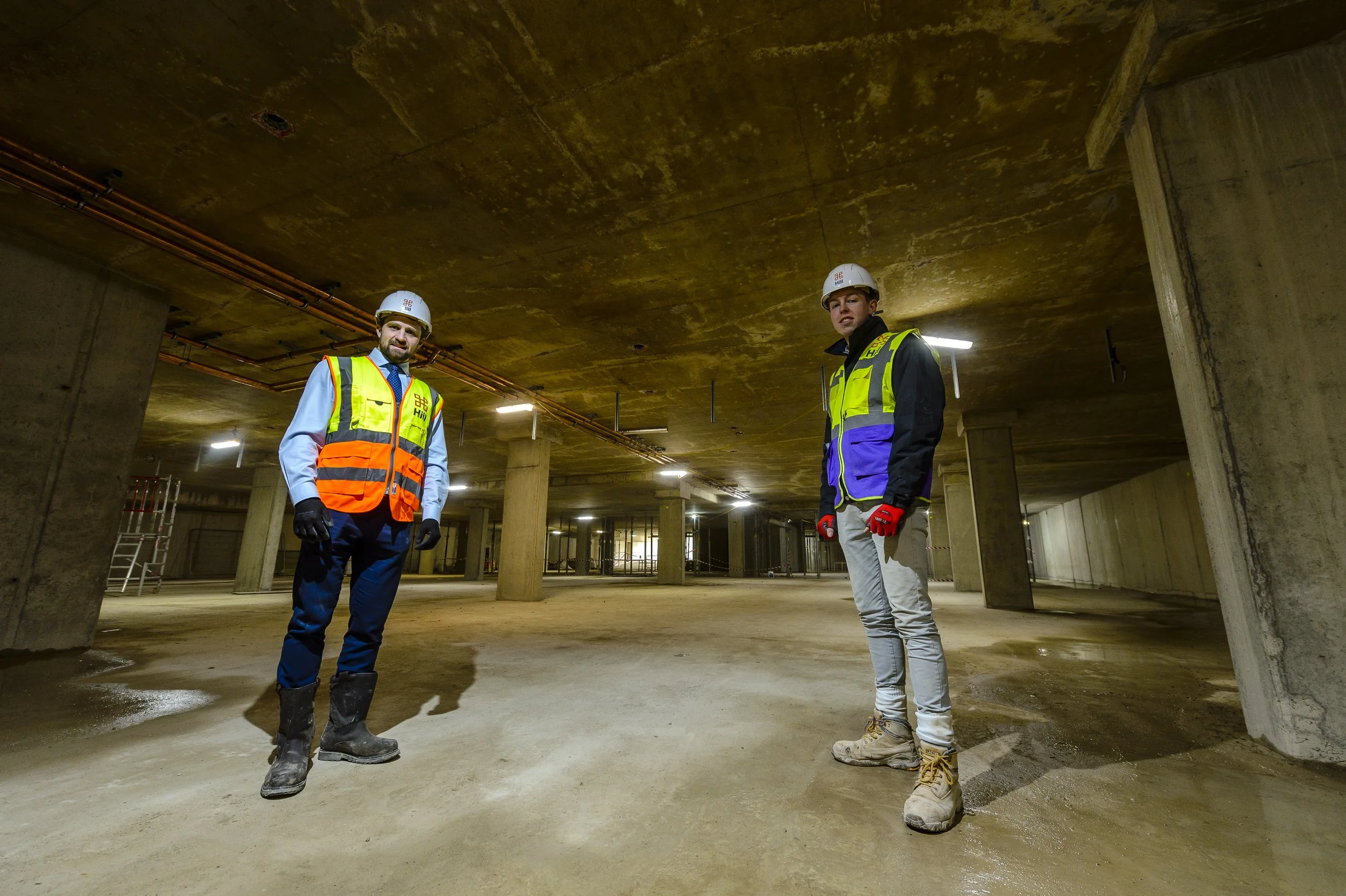
The exceptionally lightweight flash heads are another major advantage of the ELB 400 system.
Unlike modern battery monolights, which house the battery, electronics and flash tube within a single unit, the ELB 400 keeps most of its weight in the separate power pack. The Pro Head weighs approximately 280g, compared with around 2.1kg for a Godox AD400Pro before adding a modifier.
That is a substantial difference in the weight carried at the top of a light stand.
The advantage becomes particularly noticeable when using larger modifiers, such as the Deep Silver Umbrella 125cm with Translucent Diffuser or the Rotalux 135cm Octa. With so little weight positioned above the stand, the entire set-up feels better balanced and less top-heavy.
This is especially useful when working with boom arms. A lightweight head places less strain on the boom and its support, making positioning easier and potentially allowing lighter equipment to be used where appropriate. Proper counterbalancing and secure support remain essential, particularly when working overhead.
The lightweight head also offers practical benefits outdoors. Wind can make any large modifier hazardous, but reducing the weight carried high on a stand helps minimise the load and leverage involved. It does not eliminate the risk of a stand tipping over, so appropriate weighting and supervision remain important.
For photographers working alone and moving quickly between locations, the combination of easier handling, lighter support equipment and a less top-heavy set-up can make a noticeable difference over a long shooting day.
It is one of the reasons the ELB 400 continues to feel exceptionally well suited to environmental portrait photography, despite the arrival of numerous newer lighting systems.
Power for Environmental Portraits
With a maximum output of 424Ws, the ELB 400 provides ample power for the vast majority of single-subject corporate portrait assignments, both indoors and on location.
Typical applications include:
Executive portraits in boardrooms and offices.
Professional headshots on location.
Portraits of engineers, technicians and skilled tradespeople.
Staff photography within commercial environments.
Editorial-style business portraits.
Personal branding and leadership photography.
In practice, the ELB 400 provides sufficient output to shape and control light while retaining detail in the surrounding environment. Indoors, it can balance daylight entering through windows and create a polished, professional look without unnecessarily overpowering the available light.
Outdoors, it performs particularly well in open shade and overcast conditions, where its output is generally sufficient to create attractive directional lighting while preserving a natural appearance.
Modern 500Ws and 600Ws systems offer additional headroom, particularly when working in bright midday sunlight, using large modifiers or photographing groups. However, the ELB 400 rarely feels underpowered for its intended purpose.
For photographers whose work primarily involves individual environmental portraits rather than large groups or high-output commercial lighting, its power-to-weight ratio remains highly appealing.
Choosing the Right Flash Head

One of the strengths of the ELB 400 platform is the variety of flash heads available. Although the power pack remains the same, choosing the right head can significantly influence the system's performance and suitability for different types of photography.
For anyone buying used equipment, understanding these differences is particularly important, as second-hand kits often include different head combinations.
Pro Head
For environmental portraiture, the Pro Head is arguably the sweet spot within the ELB 400 system.
It offers an excellent balance of output, flash duration and practicality. Its compact design makes it easy to mount on lightweight stands while providing the performance required for demanding location assignments.
The Pro Head is particularly well suited to:
Environmental portraits.
Corporate headshots.
Editorial portraiture.
Commercial location photography.
General-purpose professional use.
It also works exceptionally well with Elinchrom's larger modifiers, including the Deep Octa and Deep Silver Umbrella ranges.
For photographers whose primary subjects are people, the Pro Head remains an excellent all-round choice.
Action Head
The Action Head is designed for photographers who prioritise freezing movement.
Its specialised flash tube produces shorter flash durations than the Pro Head in the appropriate operating conditions, making it particularly useful for:
Sports photography.
Dance photography.
Splash photography.
Action sequences.
High-speed commercial work.
The trade-off is a more specialised application. Although the Action Head can certainly be used for corporate portraiture, most photographers are unlikely to benefit enough from its faster flash durations to justify choosing it over the Pro Head.
Unless freezing motion is a significant part of your workflow, the Action Head is best regarded as a specialist tool rather than the default choice for environmental portraiture.
HS Head
The HS Head was developed to optimise performance when using Elinchrom's Hi-Sync technology with compatible camera and transmitter combinations.
Hi-Sync uses carefully timed flash output to enable synchronisation at shutter speeds above a camera's conventional flash sync speed. This can be particularly useful when photographing outdoors, where controlling ambient light while maintaining a wide aperture is often desirable.
Photographers who regularly work in bright conditions and want to darken backgrounds or use wider apertures may find the HS Head worth considering.
However, it is less common on the used market than the Pro Head and occupies a more specialised position within the system.
The Pro Head can also be used with compatible high-speed synchronisation techniques, including Elinchrom's OverDrive Sync (ODS) approach. Consequently, photographers should consider their camera, transmitter and intended working method before deciding whether the HS Head offers a meaningful advantage.
Original Ranger Quadra Heads
Those considering the original Ranger Quadra should also be aware that several head variants exist, including the original Pro and Action heads and later HS-related options.
Although the original Quadra system predates the ELB 400, its heads can remain perfectly capable tools for environmental portraiture. Differences in flash duration and synchronisation capabilities may matter for particular applications, but the resulting image quality in conventional portrait work is often much closer than the differences in specifications might suggest.
Many used Quadra kits still represent excellent value and provide an affordable entry point into the Elinchrom ecosystem.
Which Head Would I Choose?
For environmental corporate portrait photography, my recommendation is straightforward:
Pro Head: The best all-round option for people photography.
HS Head: Worth considering if Hi-Sync work and high-shutter-speed daylight balancing are central to your shooting style.
Action Head: Excellent for specialist high-speed applications, but often unnecessary for conventional corporate portraiture.
If I were buying an ELB 400 system today primarily to photograph executives, business owners and professionals in their working environments, I would actively seek a kit equipped with the Pro Head.
Its combination of portability, versatility, useful flash-duration characteristics and compatibility with appropriate ODS workflows makes it a particularly attractive option for this type of work.
High-Speed Synchronisation and OverDrive Sync Performance
One often-overlooked advantage of pairing the ELB 400 with a Pro Head is the ability to work above a camera's normal flash synchronisation speed using compatible equipment and techniques.
With compatible Canon cameras and the appropriate Elinchrom triggering equipment, I have found ODS (OverDrive Sync) particularly useful for environmental portraiture. By adjusting flash timing, ODS can extend the usable shutter-speed range while helping to minimise the uneven illumination that can occur when flash synchronisation is not properly controlled.
For corporate portrait photographers, this additional flexibility can be invaluable. It allows greater control over ambient light, easier management of bright backgrounds and the ability to work with wider apertures while retaining flash illumination.
In my experience, ODS settings between 2.0ms and 2.5ms have often provided a good balance of frame coverage, output and image quality with my particular camera and shooting configurations.
These values should be treated as starting points rather than universal recommendations. Results depend on the camera body, shutter characteristics, transmitter, flash head, power setting and shutter speed.
It is also important to distinguish ODS from conventional High-Speed Sync (HSS) and Elinchrom's Hi-Sync approach. Although all three techniques address the challenge of using flash above normal synchronisation speeds, they work differently and have different performance characteristics.
ODS can be particularly attractive when the objective is to retain as much usable flash output as possible while extending synchronisation beyond the camera's normal limit. However, the results must be tested with the specific equipment being used.
For outdoor corporate portraits and locations dominated by natural light, the additional flexibility can make the ELB 400 a remarkably capable daylight-balancing system.
Checking for Banding
Whenever working beyond a camera's normal flash synchronisation speed, it is important to check for banding or uneven illumination across the frame.
Performance can vary depending on the camera, transmitter firmware, flash head, shutter speed and ODS timing. During set-up, I recommend taking several test frames and examining the entire image, paying particular attention to the top and bottom edges.
If banding appears, adjust the timing and repeat the tests rather than assuming that a particular setting will work across every camera body.
Once the system has been properly tested and configured for a particular camera and shooting arrangement, the ELB 400 and Pro Head can become a very effective tool for balancing flash with ambient light.
Light Quality
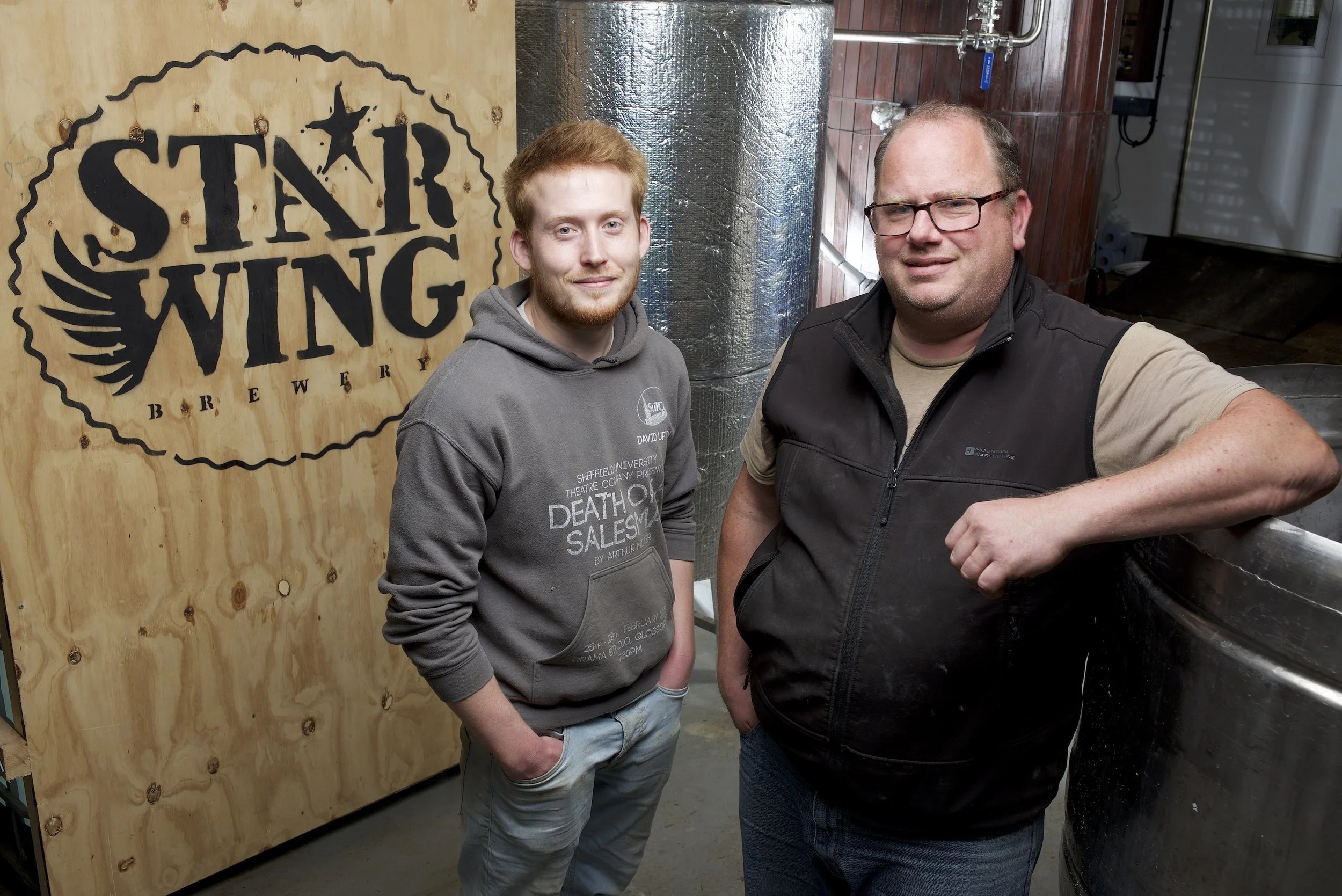
Light quality has always been one of Elinchrom's greatest strengths, and the ELB 400 benefits enormously from the company's extensive modifier ecosystem.
Particularly effective options for corporate portraiture include:
Elinchrom Deep Octa 70cm.
Elinchrom Deep Octa 100cm.
Elinchrom Rotalux Octa 135cm.
Elinchrom Deep Silver Umbrella 125cm with Translucent Diffuser.
These modifiers offer different balances of softness, directionality and control, allowing the photographer to adapt the lighting to the subject and environment.
The resulting images can possess a refined quality often associated with much larger studio lighting set-ups. For executive and leadership portraits, this helps create photographs that feel professional, approachable and authentic without appearing excessively lit or stylised.
The Deep Silver Umbrella 125cm with Translucent Diffuser deserves particular mention. Combined with the ELB 400 and Pro Head, it produces an excellent balance of softness, directionality and efficiency, making it one of my favourite options for location-based corporate photography.
Its size also makes it versatile enough to produce attractive light for a range of subjects and compositions, from relatively tight executive portraits to environmental images that show more of the workplace.
Of course, the modifier is only part of the equation. Its distance from the subject, position relative to the camera, ambient conditions and the surrounding environment all contribute to the final result.
Nevertheless, the ELB 400's ability to work effectively with these modifiers is a significant part of its continuing appeal.
Colour Consistency
Despite its age, the ELB 400 continues to perform well in terms of colour consistency.
Elinchrom specifies colour stability of ±0.5% under its stated conditions, and the system is designed to deliver consistent results across its normal operating range.
For assignments involving multiple subjects photographed over several hours, this predictability helps maintain consistent skin tones and reduces the need for corrective post-production work.
Actual results will depend on the operating conditions, power settings, flash head and condition of the individual unit. Nevertheless, the ELB 400 remains a dependable option for professional portrait work where consistency matters.
Battery Performance
Battery performance is another area in which the ELB 400 remains competitive.
Elinchrom specifies approximately 350 full-power flashes from a fully charged battery under its stated test conditions. At lower power settings, the number of available flashes increases substantially.
For typical corporate portrait assignments, where flash is often used below maximum output, a single battery can provide considerable shooting capacity. Whether it lasts an entire day will depend on the power settings, recycle mode, modelling lamp use, shooting frequency and age and condition of the battery.
For longer assignments, carrying a spare battery is sensible, particularly when working across multiple locations without convenient access to charging facilities.
The battery's condition is also an important consideration when buying used equipment. A well-maintained pack with a healthy battery can remain a practical working tool, whereas an ageing battery may significantly reduce the system's convenience.
Combined with the lightweight head design, the ELB 400 remains an appealing solution for photographers who spend long days working on location.
Buying Used: An Affordable Route into the Elinchrom System
One of the ELB 400's greatest strengths today is the number of systems available on the second-hand market.
As photographers have moved towards newer products such as the Elinchrom FIVE and THREE, many ELB 400 kits have become available at attractive prices.
For photographers looking to build a capable location lighting system without spending a fortune, the used market can offer excellent value. Packs, Pro Heads, batteries, transmitters and modifiers can all be found second-hand, although availability and condition vary.
Because the system was built to professional standards, many examples continue to perform reliably after years of service. However, age and previous use should not be overlooked: inspect the pack, cables, connectors, flash tube, battery and charger carefully before committing to a purchase.
It is also worth considering the original Elinchrom Ranger Quadra, the predecessor to the ELB 400.
Although it lacks some of the refinements introduced with the ELB 400, the underlying concept remains much the same, and image quality in conventional portrait applications can be virtually indistinguishable.
Many original Ranger Quadra packs use lead-gel batteries. Although these can be inexpensive to replace, their performance and longevity differ from those of the later lithium-ion batteries used in the ELB 400.
Lead-gel batteries generally offer slower recycling and less convenient handling than modern lithium-ion alternatives. Their condition is particularly important when assessing an older kit, so check the battery's age, charging behaviour and actual performance rather than relying on its appearance alone.
Replacement costs also vary according to the battery specification and supplier, so it is worth checking current availability before buying.
Studio and Location Flexibility

Another practical advantage of the ELB 400 is that it can be used with its charger connected, allowing the battery to be replenished during operation when conditions permit.
This can be useful for headshot days, editorial assignments and lengthy corporate commissions where access to mains electricity is available.
However, the charger should not be regarded as an unlimited direct mains power supply. During sustained high-power shooting, the battery can still discharge even with the charger connected.
For location work, the battery-powered design remains the system's principal advantage, while access to mains electricity can provide additional flexibility during longer sessions.
For photographers who regularly move between studio-style headshot work and environmental portraits on location, this adaptability makes the ELB 400 particularly practical.
Ultimately, the system continues to fulfil its original purpose: delivering reliable portable flash power and excellent light quality.
In an industry often preoccupied with the latest equipment, the ELB 400 and the original Ranger Quadra serve as useful reminders that dependable performance, good modifiers and well-controlled light matter far more than owning the newest piece of equipment.
Limitations
No review would be complete without acknowledging the areas where the ELB 400 shows its age.
The original Skyport triggering system lacks some of the sophistication and integration available in newer lighting platforms. Although compatible transmitters can extend its capabilities, photographers should check the precise compatibility of their camera, transmitter and desired synchronisation features before buying.
There is also no native TTL flash exposure automation. For photographers who prefer working manually, this is unlikely to be a concern. Those who rely on TTL for rapidly changing situations may find newer systems more convenient.
Compared with modern 500Ws and 600Ws battery-powered lights, the ELB 400 offers less outright power and fewer contemporary conveniences. Photographers who regularly work in harsh midday sunlight, use very large modifiers or photograph larger groups may benefit from the additional output of newer alternatives.
The age of the platform also makes condition and serviceability important considerations. Battery health, replacement parts and the availability of suitable accessories should all be taken into account when assessing a second-hand kit.
Viewed within the context of environmental corporate portraiture, however, these limitations remain relatively minor.
The ELB 400 was designed around a clear set of priorities, and those priorities remain relevant to photographers who value portability, predictable performance and control over their lighting.
Final Verdict
More than a decade after its introduction, the Elinchrom ELB 400 remains one of the most compelling portable lighting systems available to environmental portrait photographers.
While newer lights may offer greater power, TTL automation and more sophisticated triggering systems, few combine portability, reliability, light quality and second-hand value quite as effectively.
Paired with the Pro Head, the ELB 400 excels at the types of assignments many corporate photographers undertake every day, from executive portraits and editorial commissions to location headshots and personal branding photography.
Add access to Elinchrom's excellent modifier ecosystem, useful ODS functionality with compatible equipment, and the flexibility to use the system with its charger connected when appropriate, and the ELB 400 remains a highly attractive proposition.
Most importantly, it produces beautiful light.
Combined with modifiers such as the Deep Silver Umbrella 125cm with Translucent Diffuser, it can create polished, professional portraits that meet the demands of modern corporate photography while maintaining a natural and authentic appearance.
For photographers seeking a dependable, professional lighting system for environmental corporate portraiture, a well-maintained ELB 400 with a Pro Head remains one of the smartest purchases available on the used market.
Rating: 8.5/10
An exceptionally capable portable flash system that continues to excel at what it was designed to do: create professional environmental portraits with consistency, flexibility and superb light quality. For corporate portrait photographers, it remains an excellent-value lighting system that proves you don't need the newest equipment to produce outstanding results.
Elinchrom ELB 400: Key Specifications
Maximum flash energy - 424Ws
System type - Battery-powered pack-and-head flash system
Flash head reviewed - Elinchrom Pro Head
Pro Head weight - Approximately 280g
Battery - Lithium-ion
Battery endurance - Approximately 350 full-power flashes, as specified by Elinchrom
Flash head options - Pro, Action and HS-compatible options, depending on configuration
Flash synchronisation - Standard synchronisation, with ODS available using compatible equipment
TTL - No native TTL exposure automation
Lighting modifiers - Compatible with Elinchrom's extensive modifier system
Power options - Battery operation; charger can be connected during use, subject to power consumption
Availability - Primarily the second-hand market
Best suited to - Environmental portraits, corporate headshots, editorial and commercial location photography
Elinchrom Ranger Quadra: Key Specifications
Maximum flash energy - 400Ws
System type - Battery-powered pack-and-head flash system
Power distribution - Asymmetric 2:1 across two outlets
Flash head options - Pro (A Head) and Action (S Head), with variations depending on generation
Power range - 8.2–400Ws overall, depending on outlet
Battery options - Original lead-gel and later lithium-ion battery boxes
Battery endurance - Approximately 110–150 full-power flashes with the original lead-gel battery; up to 280–320 with the lithium-ion version, depending on recycling mode
Recycling time - Approximately 2–2.3 seconds at full power in fast mode, depending on battery type
Flash synchronisation - Standard synchronisation; performance depends on the head and configuration
Wireless triggering - Integrated Elinchrom Skyport receiver
TTL - No native TTL exposure automation
Head weight - Approximately 250g for the head itself, excluding cable and accessories
Pack weight -
Approximately 3kg with the original lead-gel battery; around 2kg with the lithium-ion battery box
Lighting modifiers - Elinchrom Ranger Quadra-compatible modifiers and accessories
Availability - Primarily the second-hand market
Best suited to - Environmental portraits, corporate headshots, editorial and commercial location photography